

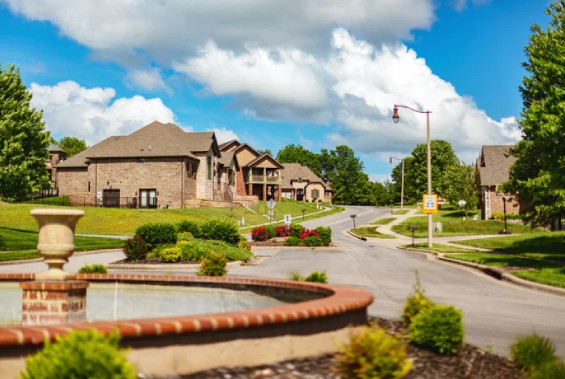
An increasing number of homes across the U.S. are governed by private organizations known as homeowners associations (HOAs). These groups exist to enforce community rules, maintain common areas and provide security, which can bring peace of mind to homeowners. However, living in a community governed by an HOA also requires paying dues and forgoing some of the freedom that comes with owning private property.
If you’re wondering exactly what an HOA is as well as what the benefits and drawbacks of owning a home under an HOA are, here’s what you should know.
What is a homeowners association?
An HOA is a private organization that governs properties within a particular community or subdivision. The covenants, conditions and restrictions (CC&Rs) vary by association and state. However, HOA rules generally govern the use of common areas along with the homeowner’s responsibility for maintaining their house and landscaping.
Membership is mandatory if you move into a community under an HOA jurisdiction. Annual or monthly dues are necessary to cover administrative expenses and the upkeep of common areas. Residents typically elect board members to manage the HOA and enforce the community covenants.
“Before moving into a community where there is a homeowners association, read the HOA rules thoroughly because they vary from one to another,” says Dottie Herman, vice chair and former CEO of Douglas Elliman Real Estate. “One HOA might have certain hours you can walk your dog or water your lawn, and others may not — so know the rules of your HOA inside out.”
Never owned a home before? Learn how first-time homebuyer programs could help.
Types of HOAs
There are several types of community associations with private rules and regulations that you might come across, including:
- Homeowners associations: An HOA is the most common neighborhood organization, and it governs a community of houses. Residents typically elect board members to run the HOA. The board also enforces rules, which are usually focused on exterior appearance and upkeep.
- Condo associations: This type of association is similar to an HOA, but it governs a condominium community. Residents are responsible for maintaining the interior of their homes while the association maintains the common areas and infrastructure, such as hallways, pipes, sidewalks and recreational areas.
- Civic associations: This kind of organization has rules and regulations but with a more casual structure. The community’s guidelines are generally unenforceable, and membership dues are optional.
- Housing cooperatives: Also referred to as a co-op, this is an arrangement where residents buy shares in a housing corporation that owns the building. The residents live in the building units and pay a monthly fee, which goes toward maintaining the property and the common areas. The co-op board is run by members who can vote on policies and enforce rules.
- Master associations: This type of association is typically present in a larger development with several subdivisions or complexes. Smaller HOAs can still operate within developments, although they all follow similar rules and regulations.
Tip: Knowing the association structure is important if you’re choosing between mortgage programs. With a loan backed by the Federal Housing Administration (FHA) or Department of Veterans Affairs (VA), for instance, the lender might need to approve the association and verify the financial stability of both it and the community.
How an HOA works
An HOA is a private organization with board members elected by community residents at public meetings. The depth and enforcement level of HOA rules and regulations vary but might focus on the following topics:
- Architecture and appearance: Home designs might need to maintain a similar style and paint color. There can also be regulations about fence height and permitted landscape designs. Homeowners are generally responsible for routine maintenance, such as exterior pressure washing, lawn mowing and necessary repairs.
- Behavior in common areas: Swearing and loud music are typically prohibited, and glass containers might not be allowed in the pool area (if applicable). Party curfews are also standard.
- Noise guidelines: Loud music and gatherings at your home typically aren’t permitted after a specific hour or early in the morning.
- Parking and storage: Residents might not be able to park vehicles on the street, while trailers and campers could be entirely prohibited.
- Pets: Associations might restrict the number of pets per property along with the size or breed of permitted animals.
- Rental policies: A community association could prohibit short-term rentals or only permit a percentage of properties to be rental units.
Keep in mind: Living in an HOA doesn’t impact current mortgage rates for potential homebuyers. However, the lender might include monthly association fees in the borrower’s debt-to-income (DTI) ratio to make sure they can afford the cost.
HOA board vs. management company
An HOA board consists of several elected positions, including a president, vice president, secretary and treasurer. Neighborhood residents usually hold these offices voluntarily, but it’s common to contract with HOA management companies when extra help is necessary for handling administrative duties, collecting dues and hiring maintenance providers.
Board members still create and enforce the community policies and fee schedules. However, the management company might send compliance correspondence to residents and collect the necessary fees.
HOA costs and fees
Every property owner within an HOA jurisdiction is required to pay membership dues that are collected monthly or annually. The fee amount depends on several factors, including the number of amenities, services and cost of living.
The average HOA fee ranges from $200 to $300 per month, although the amount can vary widely by community and state. For example, some monthly fees go up to $1,000—and you’ll have to pay them along with your mortgage payment, property taxes and homeowners insurance.
Two incidental fees might also apply:
- Special assessments: A one-time levy when additional funding is needed for major improvements or repairs to common areas. An assessment might also be necessary to address budget shortfalls.
- Fines and penalties: Homeowners can be penalized for breaking the rules.
The HOA bylaws list when these add-on expenses can be instituted and the maximum amounts. Depending on the agreement, these costs can be collected monthly, quarterly or annually. You might also be able to create payment plans if you can’t afford the regular payment amount.
Tip: Calculating the HOA dues while comparing homes and mortgage options can help you determine your monthly loan payment and total housing costs. You can also see if the community amenities are worth the dues and special assessments.
Note that mortgage lenders usually won’t collect HOA dues in escrow like taxes and insurance because you’ll pay them directly to the association.
Common HOA amenities
HOA dues can help provide and maintain amenities that are accessible to all members of the association. Some of the most common shared features include:
- Clubhouse.
- Coworking space.
- Exercise equipment.
- Pet exercise areas.
- Picnic pavilions.
- Playgrounds.
- Outdoor patios.
- Swimming pool.
- Tennis courts.
- Walking trails.
Upscale HOAs might also provide amenities like equestrian facilities, ponds and golf course access. The options ultimately depend on the community, development size and terrain.
Pros and cons of HOAs
Pros of HOAs
- Minimum property standards to optimize curb appeal.
- Can mediate disputes between neighbors.
- Access to shared amenities.
- Maintains common areas like streets and sidewalks.
Cons of HOAs
- Regulations can be too restrictive at times.
- Potentially expensive membership dues.
- Amenities might not be practical or well-maintained.
- Major projects or repairs could require a special assessment.
Why do HOAs exist?
HOAs provide common amenities that can be impractical for individuals to have at their own houses. And because HOAs uphold common standards and regulations, they can help preserve property values and encourage neighbors to maintain their homes.
For example, an HOA can take action if a homeowner doesn’t complete necessary repairs or plays loud music late at night. Board members or the management agency can also mediate disputes between neighbors and determine who is responsible for repairs or improvements when issues occur on boundary lines.
A fully online, streamlined experience: Compare the best online mortgage lenders.
HOAs and similar community associations are private entities that can issue noncompliance fines when homeowners don’t follow rules or pay dues. It’s possible for them to file liens that can result in foreclosure if necessary expenses go unpaid over time.
However, the likelihood of liens and lawsuits differs by association. For example, the HOA must pay legal fees when exercising legal power. It also depends on how aggressive the current HOA board is with enforcing the bylaws.
CC&Rs must usually be filed with the county clerk’s office to be legally enforceable. These rules typically “run with the land,” meaning all present and future property owners are subject to the same policies.
