

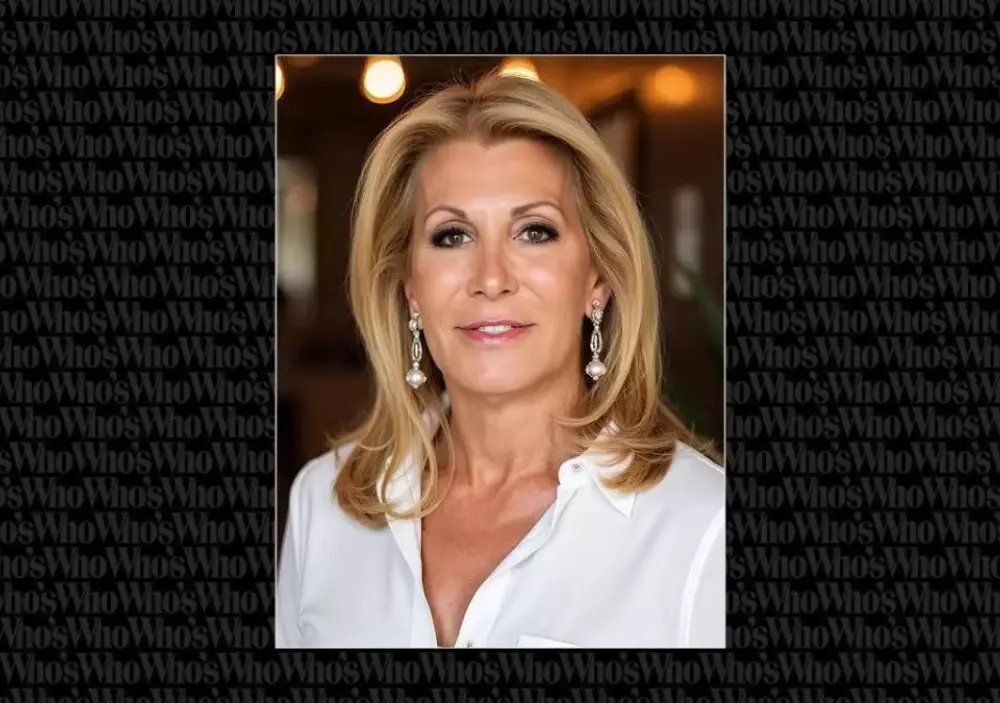
Real estate was not a career aspiration for Dottie Herman. Initially, she studied to become a teacher. After earning a Bachelor of Arts from Adelphi University, she later became a certified financial planner following years of night classes. However, after seizing an opportunity in real estate, she would go on to become the vice chair of Douglas Elliman, a company that is now one of the largest residential brokerages in the United States.
Challenges Faced by Small Local Brokerages
The industry Ms. Herman entered in the 1980s was fragmented and local. Brokerages were often small, relationship-driven businesses with limited scale. When Merrill Lynch began experimenting with a national real estate model, it signaled a shift. The company wanted multiple revenue streams from the same client, including mortgages, banking and home sales.
Ms. Herman joined that effort and saw an opportunity. “I read in a book that if you want to get ahead in life, you need to work where the people who make decisions are,” she says. “You are better off working in a mail room if the people who make decisions are there than working somewhere else.” She flew unannounced to meet the executives. It was a bold move that earned her a regional leadership role overseeing the Northeast.
Building Strength in Uncertain Times
When Merrill Lynch decided to exit real estate and sell the division to Prudential, instability rippled through the ranks. Brokers feared for their livelihoods. Competitors circled, and headlines warned employees not to stay on a “sinking ship.”
At 28, with no capital and no safety net, Ms. Herman was urged to buy the remaining Long Island operation, though banks wouldn’t lend to her. Nevertheless, she acquired the company with no money down and began expanding into the Hamptons and Manhattan.
However, resistance followed when competitors boycotted Ms. Herman. Manhattan brokers questioned her Long Island roots. She met with hundreds of agents personally and made a simple appeal. “I need you. I put everything on the line for you,” she says.
Culture as Competitive Advantage
Ms. Herman credits her years at Merrill Lynch for teaching her how scale and culture can coexist. “If you want to be great, you have to have people who are better than you,” she says. In response, she hired experts in areas where she lacked experience, allowing her to concentrate on motivation and growth.
Ms. Herman’s approach challenged a common industry problem. Large brokerages often reduce agents to production numbers, and in turn, this weakens loyalty. She structured Douglas Elliman around shared goals. Individual targets fed into the company-wide objectives, creating mutual accountability. “People will work harder not to let a team down than they’ll actually work for themselves,” she says.
Additionally, training became central. Ms. Herman invested heavily in education programs. She also encouraged social events to inspire collaboration. Under her leadership as chief executive officer from 2003 to 2018 and later as vice chair, Douglas Elliman has grown exponentially. “Together we’re strong. If we split up, we’re weak,” she says.
Ms. Herman also extended her influence through the media. She hosts “Eye on Real Estate” and “Real Talk,” programs that focus on market trends and personal resilience. She is also available for public speaking engagements. “I’m a total entrepreneur,” she says. Her career illustrates how conviction and culture can outweigh capital. Loyalty, education and shared purpose continue to define her impact in the industry.
About Marquis Who’s Who®: Since 1899, when A. N. Marquis printed the First Edition of Who’s Who in America®, Marquis Who’s Who® has chronicled the lives of the most accomplished individuals and innovators from every significant field, including politics, business, medicine, law, education, art, religion and entertainment. Who’s Who in America® remains an essential biographical source for thousands of researchers, journalists, librarians and executive search firms worldwide. The suite of Marquis® publications can be viewed at the official Marquis Who’s Who® website, www.marquiswhoswho.com.
